

 English
 中文
中文
การเรียนภาษาอังกฤษให้สามารถสื่อสารได้อย่างเป็นธรรมชาติ มีหลายส่วนประกอบที่ต้องทำความเข้าใจ นอกจากเทคนิคการฝึกฟังภาษาอังกฤษหรือฝึกพูดภาษาอังกฤษ หลักไวยากรณ์และการเข้าใจประโยคก็เป็นสิ่งสำคัญเช่นกัน ซึ่งหนึ่งในหัวข้อสำคัญก็คือเรื่อง “กริยา 3 ช่อง” ที่เป็นหัวใจสำคัญในการสร้างประโยคที่ถูกต้องตามกาลเวลาต่างๆ
บทความนี้ Guru English School ได้รวบรวม ตารางกริยา 3 ช่อง ฉบับเข้าใจง่าย พร้อมเทคนิคการจำที่ไม่ต้องนั่งท่อง เพื่อให้คุณนำไปใช้งานได้จริงในชีวิตประจำวัน การสอบ และการทำงาน
กริยา 3 ช่อง คืออะไร?
กริยา 3 ช่อง คือคำกริยาในภาษาอังกฤษที่มีการเปลี่ยนแปลงรูปไปจากเดิมเมื่ออยู่ในรูปอดีต (Past Simple) และรูปกริยาช่อง 3 (Past Participle) เพื่อใช้บอกว่าเหตุการณ์นั้นเกิดขึ้นเมื่้อใด โดยจะแบ่งออกเป็น 3 ช่อง
- ช่องที่ 1 (Base Form / V.1): ใช้กับเหตุการณ์ปัจจุบัน (Present Simple Tense) หรือเหตุการณ์ที่เป็นความจริงเสมอ
- ช่องที่ 2 (Past Simple / V.2): ใช้กับเหตุการณ์ที่เกิดขึ้นและจบลงไปแล้วในอดีต
- ช่องที่ 3 (Past Participle / V.3): ใช้กับเหตุการณ์ที่เกิดขึ้นตั้งแต่อดีตดำเนินมาถึงปัจจุบัน (Perfect Tense) หรือใช้ในประโยคที่ประธานเป็นผู้ถูกกระทำ (Passive Voice)
การรู้จักกริยา 3 ช่อง ช่วยให้สามารถสร้างประโยคภาษาอังกฤษได้อย่างถูกต้องตามหลักไวยากรณ์ในทุก Tense
กริยาช่อง 2 กับกริยาช่อง 3 ต่างกันอย่างไร และใช้อย่างไร?
ความแตกต่างระหว่างกริยาช่อง 2 (Past Simple) และกริยาช่อง 3 (Past Participle) เป็นสิ่งสำคัญที่ผู้เรียนภาษาอังกฤษมักสับสน
กริยาช่อง 2 ใช้เพื่ออธิบายเหตุการณ์ที่เกิดขึ้นและจบลงแล้วในอดีตอย่างชัดเจน โดยมักจะระบุเวลาที่แน่นอน เช่น “I went to the market yesterday.” (ฉันไปตลาดเมื่อวานนี้)
กริยาช่อง 3 (Past Participle) ใช้ใน 3 โครงสร้างหลัก ได้แก่
- Present Perfect Tense — Have/Has + V3
- I have eaten here before. (ฉันเคยกินที่นี่มาก่อน)
- Past Perfect Tense — Had + V3
- She had left before I arrived. (เธอออกไปก่อนที่ฉันจะมาถึง)
- Passive Voice — Be + V3
- The letter was written by Tom. (จดหมายถูกเขียนโดยทอม)
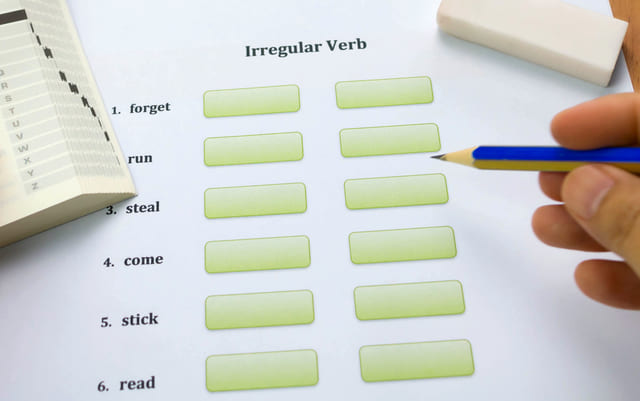
ตารางกริยา 3 ช่อง ฉบับเข้าใจง่าย คำที่พบบ่อยในชีวิตประจำวัน พร้อมคำแปลและตัวอย่างการใช้
เพื่อให้เห็นภาพได้อย่างชัดเจนมากยิ่งขึ้น มาดูตัวอย่าง ตารางกริยา 3 ช่อง พร้อมคำแปลและตัวอย่างการใช้งาน
กลุ่มที่ 1: กริยาสม่ำเสมอ (Regular Verbs) — เติม -ed ทั้งสองช่อง
| V1 (Base) | V2 (Past) | V3 (Past Participle) | คำแปล | ตัวอย่างประโยค |
| work | worked | worked | ทำงาน | She worked hard last year. / She has worked here for 5 years. |
| play | played | played | เล่น | He played football yesterday. / He has played since childhood. |
| study | studied | studied | เรียน | They studied all night. / They have studied English for 2 years. |
| talk | talked | talked | พูด | We talked for hours. / We have talked about this before. |
| watch | watched | watched | ดู | I watched a movie. / I have watched it twice. |
| listen | listened | listened | ฟัง | She listened carefully. / She has listened to this song before. |
| help | helped | helped | ช่วย | He helped me move. / He has helped many students. |
| cook | cooked | cooked | ทำอาหาร | Mom cooked dinner. / Mom has cooked Thai food for us. |
| clean | cleaned | cleaned | ทำความสะอาด | They cleaned the house. / The house has been cleaned. |
| open | opened | opened | เปิด | She opened the door. / The door was opened by her. |
| close | closed | closed | ปิด | He closed the window. / The window has been closed. |
| start | started | started | เริ่ม | The class started at 9. / The class has started. |
| finish | finished | finished | เสร็จ | We finished the project. / The project has been finished. |
| call | called | called | โทร | She called me twice. / I have called him many times. |
| visit | visited | visited | เยี่ยม | We visited Chiang Mai. / We have visited there before. |
กลุ่มที่ 2: กริยาไม่สม่ำเสมอ กลุ่ม A-B-B (ช่อง 2 = ช่อง 3)
| V1 (Base) | V2 (Past) | V3 (Past Participle) | คำแปล | ตัวอย่างประโยค |
| bring | brought | brought | นำมา | He brought food. / He has brought gifts many times. |
| buy | bought | bought | ซื้อ | She bought a dress. / She has bought it already. |
| catch | caught | caught | จับ | He caught the ball. / The thief was caught by police. |
| feel | felt | felt | รู้สึก | I felt tired. / I have felt this way before. |
| find | found | found | พบ | We found the answer. / The answer has been found. |
| get | got | got | ได้รับ | She got a promotion. / He has got many awards. |
| have | had | had | มี | They had a meeting. / I have had enough rest. |
| hear | heard | heard | ได้ยิน | I heard the news. / The news has been heard by everyone. |
| hold | held | held | ถือ | She held the baby. / An event was held yesterday. |
| keep | kept | kept | เก็บ | He kept his promise. / She has kept this secret. |
| leave | left | left | ออกไป | They left early. / She has left the office. |
| lend | lent | lent | ให้ยืม | He lent me money. / She has lent books to everyone. |
| lose | lost | lost | แพ้/หาย | We lost the game. / My phone was lost yesterday. |
| make | made | made | ทำ | She made a cake. / The decision was made by the team. |
| mean | meant | meant | หมายถึง | What meant this? / What has been meant by this? |
| meet | met | met | พบ | We met at school. / We have met before. |
| pay | paid | paid | จ่าย | He paid the bill. / The bill has been paid. |
| say | said | said | พูด | She said hello. / It has been said many times. |
| sell | sold | sold | ขาย | He sold his car. / The car has been sold. |
| send | sent | sent | ส่ง | I sent a message. / The email has been sent. |
| sit | sat | sat | นั่ง | He sat quietly. / She has sat in this chair before. |
| sleep | slept | slept | นอนหลับ | I slept early. / She has slept for 8 hours. |
| spend | spent | spent | ใช้/ใช้เวลา | They spent all day. / A lot has been spent on this. |
| stand | stood | stood | ยืน | She stood up. / He has stood by me always. |
| teach | taught | taught | สอน | She taught English. / I have been taught well. |
| tell | told | told | บอก | He told the truth. / The truth has been told. |
| think | thought | thought | คิด | I thought about you. / It has been thought through. |
| understand | understood | understood | เข้าใจ | She understood now. / The lesson has been understood. |
| win | won | won | ชนะ | They won the match. / The award has been won by her. |
กริยาไม่สม่ำเสมอ กลุ่ม A-B-C (ทั้งสามช่องต่างกัน)
| V1 (Base) | V2 (Past) | V3 (Past Participle) | คำแปล | ตัวอย่างประโยค |
| be (is/am/are) | was/were | been | เป็น/อยู่/คือ | She was happy. / She has been here before. |
| begin | began | begun | เริ่ม | The show began at 7. / The show has begun. |
| break | broke | broken | แตกหัก | He broke the glass. / The glass was broken. |
| choose | chose | chosen | เลือก | She chose English. / The winner has been chosen. |
| come | came | come | มา | They came late. / She has come here before. |
| do | did | done | ทำ | I did my homework. / My homework has been done. |
| draw | drew | drawn | วาด | He drew a picture. / The picture was drawn by him. |
| drink | drank | drunk | ดื่ม | She drank water. / All the water has been drunk. |
| drive | drove | driven | ขับรถ | He drove to work. / She has driven here before. |
| eat | ate | eaten | กิน | I ate breakfast. / Have you eaten yet? |
| fall | fell | fallen | ล้ม/ตก | She fell down. / The leaves have fallen. |
| fly | flew | flown | บิน | He flew to London. / She has flown many times. |
| forget | forgot | forgotten | ลืม | I forgot his name. / His name has been forgotten. |
| give | gave | given | ให้ | She gave me a gift. / The gift has been given. |
| go | went | gone | ไป | We went to school. / She has gone abroad. |
| grow | grew | grown | โต/ปลูก | He grew up fast. / The business has grown a lot. |
| know | knew | known | รู้ | I knew the answer. / She has known him for years. |
| lie | lay | lain | นอนลง | He lay on the bed. / He has lain there all day. |
| ride | rode | ridden | ขี่ | She rode a horse. / He has ridden a bike before. |
| ring | rang | rung | โทร/ดัง | The phone rang. / The alarm has rung already. |
| rise | rose | risen | ขึ้น/ลุกขึ้น | The sun rose early. / Prices have risen sharply. |
| run | ran | run | วิ่ง | He ran a marathon. / She has run every day. |
| see | saw | seen | เห็น | I saw her yesterday. / Have you seen this film? |
| shake | shook | shaken | เขย่า/จับมือ | They shook hands. / The tree was shaken by the wind. |
| show | showed | shown | แสดง | She showed me around. / The results have been shown. |
| sing | sang | sung | ร้องเพลง | She sang beautifully. / The song has been sung before. |
| speak | spoke | spoken | พูด | He spoke English well. / English is spoken worldwide. |
| steal | stole | stolen | ขโมย | Someone stole my bag. / My bag was stolen. |
| swim | swam | swum | ว่ายน้ำ | She swam in the sea. / She has swum in competitions. |
| take | took | taken | เอา/พา | He took a photo. / The photo was taken by him. |
| throw | threw | thrown | โยน | He threw the ball. / The ball was thrown far. |
| wake | woke | woken | ตื่นนอน | I woke up late. / She has woken up early today. |
| wear | wore | worn | ใส่/สวม | She wore a hat. / That jacket has been worn before. |
| write | wrote | written | เขียน | She wrote a letter. / The letter was written by her. |
ตารางกริยา 3 ช่องสำหรับนักเรียนประถม
สำหรับนักเรียนชั้นประถมที่กำลังเรียนภาษาอังกฤษ อยากเก่งภาษาอังกฤษ นอกจากการฝึกฟังฝึกพูดแล้ว ก็ควรเข้าใจกริยา 3 ช่องในระดับเริ่มต้นด้วยเช่นกัน ตารางกริยา 3 ช่องสำหรับนักเรียนประถม จะมีด้วยกันดังนี้
| V1 (Base) | V2 (Past) | V3 (Past Participle) | คำแปล | ตัวอย่างประโยค |
| go | went | gone | ไป | I went to school. / I have gone there before. |
| eat | ate | eaten | กิน | She ate rice. / Have you eaten? |
| drink | drank | drunk | ดื่ม | He drank milk. / I have drunk juice. |
| sleep | slept | slept | นอน | I slept at 9. / She has slept already. |
| play | played | played | เล่น | They played outside. / We have played together. |
| run | ran | run | วิ่ง | He ran fast. / She has run every day. |
| see | saw | seen | เห็น | I saw a dog. / Have you seen my cat? |
| come | came | come | มา | She came home. / He has come here before. |
| give | gave | given | ให้ | Mom gave me cookies. / The teacher has given us homework. |
| make | made | made | ทำ | We made a cake. / It has been made already. |
| read | read | read | อ่าน | She read a book. / I have read it already. |
| write | wrote | written | เขียน | He wrote his name. / The letter was written by him. |
| sing | sang | sung | ร้องเพลง | She sang a song. / The song has been sung before. |
| draw | drew | drawn | วาด | He drew a picture. / It was drawn nicely. |
| swim | swam | swum | ว่ายน้ำ | I swam in the pool. / She has swum before. |
ตารางกริยา 3 ช่องที่จำเป็นสำหรับการสอบ TOEIC และ IELTS
การสอบ TOEIC และ IELTS มีการใช้กริยา 3 ช่องในทุกพาร์ท โดยเฉพาะในส่วนของ Reading, Writing และ Listening การเลือกรูปกริยาให้ถูกต้องช่วยเพิ่มคะแนนได้อย่างชัดเจน
กริยาที่ออกบ่อยใน TOEIC
TOEIC เน้นบริบทการทำงานและธุรกิจ กริยาเหล่านี้ปรากฏบ่อยใน Part 5-7
| V1 (Base) | V2 (Past) | V3 (Past Participle) | ความหมายในบริบทธุรกิจ | ตัวอย่างสถานการณ์ |
| submit | submitted | submitted | ส่งรายงาน/เอกสาร | การยื่นเสนอราคา หรือส่งงานตามกำหนด |
| approve | approved | approved | อนุมัติ | การผ่านแผนงบประมาณหรือคำขอลาพักร้อน |
| receive | received | received | รับเอกสาร/พัสดุ | การได้รับอีเมลหรือรับสินค้าเข้าคลัง |
| hire | hired | hired | จ้างงาน | การรับพนักงานใหม่เข้าสู่ทีม |
| promote | promoted | promoted | เลื่อนตำแหน่ง | การขยับตำแหน่งงานให้สูงขึ้น |
| schedule | scheduled | scheduled | นัดหมาย/กำหนดเวลา | การจัดตารางประชุมหรือวันส่งมอบงาน |
| cancel | cancelled | cancelled | ยกเลิก | การยกเลิกนัดหมายหรือยกเลิกโปรเจกต์ |
| confirm | confirmed | confirmed | ยืนยัน | การยืนยันการจองหรือยืนยันความถูกต้อง |
| complete | completed | completed | เสร็จสมบูรณ์ | การปิดงานหรือทำโปรเจกต์ให้เสร็จ |
| implement | implemented | implemented | นำไปใช้ | การนำแผนงานหรือระบบใหม่มาเริ่มใช้จริง |
| increase | increased | increased | เพิ่มขึ้น | ยอดขาย ผลกำไร หรือจำนวนพนักงานที่เพิ่มขึ้น |
| decrease | decreased | decreased | ลดลง | การลดต้นทุนหรือยอดการสั่งซื้อที่ลดลง |
| expand | expanded | expanded | ขยาย | การขยายตลาด ขยายสาขา หรือขยายธุรกิจ |
| invest | invested | invested | ลงทุน | การลงเงินหรือทรัพยากรเพื่อให้เกิดผลกำไร |
| negotiate | negotiated | negotiated | เจรจา | การต่อรองเงื่อนไขสัญญาหรือราคา |
| present | presented | presented | นำเสนอ | การนำเสนอผลงานหรือแผนธุรกิจในที่ประชุม |
| report | reported | reported | รายงาน | การรายงานความคืบหน้าให้หัวหน้าทราบ |
| review | reviewed | reviewed | ตรวจสอบ | การตรวจทานเอกสารหรือพิจารณาผลงาน |
| sign | signed | signed | ลงนาม | การเซ็นสัญญาซื้อขายหรือสัญญาจ้าง |
| develop | developed | developed | พัฒนา | การพัฒนาผลิตภัณฑ์ใหม่หรือพัฒนาทักษะ |
กริยาที่ออกบ่อยใน IELTS
IELTS ใช้ภาษาเชิงวิชาการมากกว่า กริยาเหล่านี้พบบ่อยใน Academic Reading/Writing Task 1-2
| V1 (Base) | V2 (Past) | V3 (Past Participle) | ความหมายในบริบทวิชาการ |
| analyze | analyzed | analyzed | วิเคราะห์ (ข้อมูล/ผลลัพธ์) |
| demonstrate | demonstrated | demonstrated | แสดงให้เห็น (ด้วยหลักฐาน) |
| establish | established | established | ก่อตั้ง/สร้างทฤษฎี/พิสูจน์ให้ยอมรับ |
| indicate | indicated | indicated | ชี้ให้เห็น/เป็นสัญญาณบอก |
| suggest | suggested | suggested | เสนอแนะ (อย่างไม่เป็นทางการเกินไป) |
| argue | argued | argued | โต้แย้ง/ให้เหตุผลสนับสนุน |
| prove | proved | proven | พิสูจน์ว่าเป็นจริง |
| describe | described | described | อธิบายลักษณะหรือรายละเอียด |
| compare | compared | compared | เปรียบเทียบ (ความเหมือน/ต่าง) |
| observe | observed | observed | สังเกต (พฤติกรรม/ปรากฏการณ์) |
| conduct | conducted | conducted | ดำเนินการ (ทำการทดลอง/สำรวจ) |
| conclude | concluded | concluded | สรุปผล |
| examine | examined | examined | ตรวจสอบ/พิจารณาอย่างละเอียด |
| identify | identified | identified | ระบุ/ชี้ตัว (ปัญหาหรือตัวแปร) |
| recognize | recognized | recognized | รับรู้/ยอมรับ |
| propose | proposed | proposed | เสนอ (แนวคิด/หัวข้อวิจัย) |
| state | stated | stated | ระบุ/แถลง (ข้อเท็จจริง) |
| support | supported | supported | สนับสนุน (สมมติฐาน) |
| apply | applied | applied | นำไปใช้ (ทฤษฎีหรือวิธีการ) |
| affect | affected | affected | ส่งผลกระทบต่อ |
เทคนิคการจำกริยา 3 ช่องแบบไม่ต้องท่องจำ
การนั่งท่องจำจากตารางกริยา 3 ช่องเป็นเรื่องที่ต้องชวนให้คนเรียนภาษาอังกฤษปวดหัวแน่ๆ และอาจน่าเบื่อและทำให้ลืมง่ายด้วย ลองใช้เทคนิคต่างๆ เหล่านี้เพื่อทำให้การจำกริยา 3 ช่องง่ายขึ้น
จำแบบจัดกลุ่ม (Group Patterns): กริยา 3 ช่อง (Irregular Verbs) มักมีแพทเทิร์นการเปลี่ยนรูป ให้จัดกลุ่มตามนี้:
- กลุ่ม AAA (รูปเหมือนกันหมด): cut-cut-cut, put-put-put, hit-hit-hit
- กลุ่ม ABB (ช่อง 2 และ 3 เหมือนกัน): buy-bought-bought, catch-caught-caught, feel-felt-felt
- กลุ่ม ABA (ช่อง 1 และ 3 เหมือนกัน): come-came-come, run-ran-run
- กลุ่ม ABC (เปลี่ยนรูปทุกช่อง): sing-sang-sung, drive-drove-driven
เรียนรู้ผ่านบริบท (Learn from Context): แทนที่จะท่องแค่ศัพท์ ให้จำเป็นประโยคที่ใช้ในชีวิตประจำวัน
ฟังเพลงหรือดูซีรีส์: เวลาได้ยินตัวละครพูดถึงเรื่องในอดีต ให้สังเกตการใช้ V.2 และ V.3 จะช่วยให้สมองจดจำได้ลึกซึ้งกว่าการอ่านจากกระดาษ
ใช้บ่อยๆ ในการเขียนและการพูด: การนำมาแต่งประโยคด้วยตัวเองบ่อยๆ จะทำให้เกิดความคุ้นชินและดึงออกมาใช้ได้ทันที
อยากพูดและเขียนภาษาอังกฤษได้อย่างมั่นใจ? เริ่มต้นกับ Guru English School
การรู้จักกริยา 3 ช่องจากตารางกริยา 3 ช่องนี้เป็นแค่องค์ประกอบหนึ่งสำหรับการเรียนภาษาอังกฤษ การใช้ภาษาอังกฤษได้จริงต้องอาศัยการฝึกฝนกับครูที่เข้าใจผู้เรียนจริงๆ
Guru English School โรงเรียนสอนภาษาอังกฤษที่มีประสบการณ์กว่า 21 ปี สอนโดยครูเจ้าของภาษาจากสหรัฐอเมริกา อังกฤษ และออสเตรเลีย ด้วยหลักสูตรจาก Oxford & Cambridge พร้อมระบบ Loop Learning ที่การันตีผลการพัฒนาที่วัดได้
จุดเด่นหลักสูตร (ตามสไตล์ Guru English)
Native English Teachers
เน้น Speaking จริง (ไม่ใช่แค่ท่องจำ)
Loop System (เรียนซ้ำจนใช้ได้จริง)
Role Play ทุกคลาส
เด็ก “กล้าพูด” และ “ใช้ได้จริง
การวัดผล (Assessment)
Pre-test / Post-test
Speaking Interview
Monthly Progress Report
Level Test (ผ่าน → เลื่อน Level)
ลองชมวิดีโอการเรียนภาษาอังกฤษของเรา Guru English
ถ้าหากสนใจเรียนภาษาอังกฤษ สามารถดูคอร์สของเราได้ เรามีให้เลือกด้วยกันหลากหลายคอร์สและช่วงอายุ
สามารถติดต่อเราได้ที่ guruenglishschool@gmail.com
เบอร์โทรศัพท์ : 093 228 8844
Line @guruenglish
ที่อยู่
สาขาเชียงใหม่: 32 ถนนสนามบินเก่า ตำบลสุเทพ อำเภอเมือง จังหวัดเชียงใหม่ 50200
สาขากรุงเทพฯ: 47/19 ถนนงามวงศ์วาน เขตจตุจักร กรุงเทพฯ 10900
คำถามที่พบบ่อยเกี่ยวกับกริยา 3 ช่อง (FAQ)
1. กริยา 3 ช่องมีกี่ประเภท และต่างกันอย่างไร?
กริยา 3 ช่องแบ่งออกเป็น 2 ประเภทหลัก ได้แก่ กริยาสม่ำเสมอ (Regular Verbs) ซึ่งเปลี่ยนรูปช่อง 2 และช่อง 3 โดยการเติม -ed เหมือนกันทั้งคู่ เช่น play → played → played และ กริยาไม่สม่ำเสมอ (Irregular Verbs) ซึ่งเปลี่ยนรูปไม่เป็นกฎ ต้องจำแยกแต่ละคำ เช่น go → went → gone โดยกริยาไม่สม่ำเสมอยังแบ่งย่อยได้อีกเป็นกลุ่ม A-B-B (ช่อง 2 = ช่อง 3) และ A-B-C (ทั้งสามช่องต่างกัน)
2. ควรจำกริยา 3 ช่องกี่คำถึงจะพอใช้งานในชีวิตประจำวัน?
สำหรับการสื่อสารในชีวิตประจำวัน การจำกริยา 3 ช่องประมาณ 100–150 คำ ถือว่าเพียงพอสำหรับการพูดและเขียนในสถานการณ์ทั่วไป สำหรับผู้ที่เริ่มต้น แนะนำให้เริ่มจาก 50 คำที่ใช้บ่อยที่สุดก่อน เช่น go, eat, have, do, make, see, come, take, get, give แล้วค่อย ๆ เพิ่มคำศัพท์ใหม่ทีละน้อย
3. วิธีที่ดีที่สุดในการจำกริยา 3 ช่องคืออะไร?
วิธีที่ได้ผลดีที่สุดคือการ จำเป็นกลุ่มตามรูปแบบเสียง (เช่น sing-sang-sung, ring-rang-rung) และ ฝึกใช้ในประโยคจริง แทนการท่องแค่ตาราง นอกจากนี้ การใช้ Spaced Repetition ทบทวนทีละน้อยอย่างสม่ำเสมอ และการฟังภาษาอังกฤษจากสื่อต่าง ๆ เช่น ซีรีส์ หนัง หรือ Podcast ก็ช่วยให้จำได้แม่นยำยิ่งขึ้น
4. กริยาช่อง 2 กับช่อง 3 ต่างกันตรงไหน และเมื่อไรควรใช้แต่ละช่อง?
กริยาช่อง 2 ใช้ใน Past Simple Tense เพื่อบอกเหตุการณ์ที่เกิดและจบในอดีต โดยใช้เป็นกริยาหลักของประโยคโดยตรง เช่น “She ate breakfast.” ส่วนกริยาช่อง 3 ใช้คู่กับ Have/Has/Had ใน Perfect Tense เช่น “She has eaten breakfast.” หรือใช้กับ Be (is/was/were/been) ใน Passive Voice เช่น “Breakfast was eaten by her.” หากใช้คำผิดช่อง ประโยคจะผิดหลักไวยากรณ์ทันที
5. กริยา 3 ช่องสำคัญแค่ไหนสำหรับการสอบ TOEIC และ IELTS?
สำคัญมาก เพราะในการสอบทั้งสองมีการทดสอบความเข้าใจเรื่องกริยาทุก Part ใน TOEIC มักออกในรูปแบบ Passive Voice และ Perfect Tense ใน Part 5-6 (Grammar) ส่วน IELTS เน้นใน Writing Task 1 (อธิบายกราฟ) และ Task 2 (Essay) ที่ต้องใช้กริยา Passive และ Perfect Tense ได้อย่างถูกต้อง ผู้ที่ใช้กริยาได้ถูกต้องมีโอกาสได้คะแนน Grammar สูงกว่าผู้ที่ใช้ผิดอย่างชัดเจน
6. เด็กประถมควรเริ่มเรียนกริยา 3 ช่องตั้งแต่อายุเท่าไหร่?
สามารถเริ่มได้ตั้งแต่ชั้น ประถมศึกษาปีที่ 3-4 (อายุประมาณ 8–10 ปี) โดยเริ่มจากกริยาสม่ำเสมอง่าย ๆ ก่อน เช่น play, walk, talk แล้วค่อยแนะนำกริยาไม่สม่ำเสมอที่พบบ่อย เช่น go, eat, come การเรียนผ่านเกม บทเพลง และการสนทนาในชีวิตประจำวันจะช่วยให้เด็กจำได้โดยไม่รู้สึกว่าต้องท่องจำ ซึ่งเป็นแนวทางที่ Guru English School ใช้กับนักเรียนทุกระดับ