

 ไทย
ไทย 中文
中文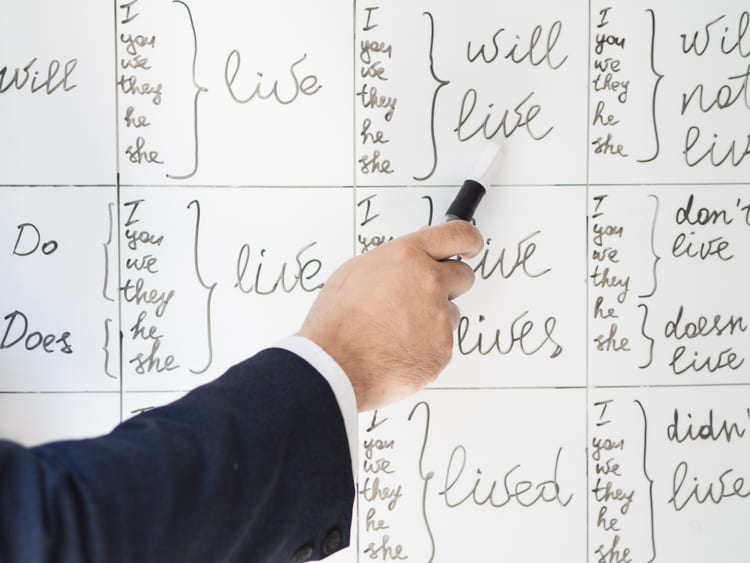
Grammar is something many people find daunting, but it is the foundation of the English language. Understanding all 12 tenses can feel overwhelming, but at Guru English, we believe that with the right understanding of principles and structures, using tenses becomes enjoyable — and makes your English feel far more natural. In this article, we’ll explain what a tense is, walk through all 12 tenses with examples, and provide an easy-to-remember reference table.
What Is a Tense?
A tense is the form a verb takes in English to reflect when an action occurs and the nature of that action — whether it has already ended, is currently happening, or is ongoing. Tenses are divided into three time frames:
- Past
- Present
- Future
Within each time frame, there are four aspects: Simple, Continuous, Perfect, and Perfect Continuous — giving us 12 tenses in total.
All 12 Tenses with Examples
1. Present Simple
Used for habitual actions, general truths, or daily routines. Structure: Subject + V1 Keywords: always, usually, often, sometimes, every day/week
- She drinks coffee every morning.
- The sun rises in the east.
2. Present Continuous
Used for actions happening at the moment of speaking or during this current period. Structure: Subject + is/am/are + V-ing Keywords: now, at the moment, right now, currently
- I am studying English right now.
- They are playing football in the park.
3. Present Perfect
Used for actions that have just been completed or have a result that affects the present. Structure: Subject + has/have + V3 Keywords: just, already, yet, ever, never, since, for
- She has just finished her homework.
- I have lived here for 5 years.
4. Present Perfect Continuous
Used for actions that started in the past and are still continuing, with an emphasis on duration. Structure: Subject + has/have + been + V-ing Keywords: since, for, all day, how long
- He has been working since 8 AM.
- They have been waiting for two hours.
5. Past Simple
Used for actions that occurred and ended at a specific point in the past. Structure: Subject + V2 Keywords: yesterday, last week/month/year, ago, in 2010
- I visited Chiang Mai last year.
- She studied all night.
6. Past Continuous
Used for actions that were in progress at a specific time in the past, often paired with Past Simple. Structure: Subject + was/were + V-ing Keywords: while, when, at that time, at 9 PM yesterday
- I was sleeping when she called.
- They were watching TV at 8 PM.
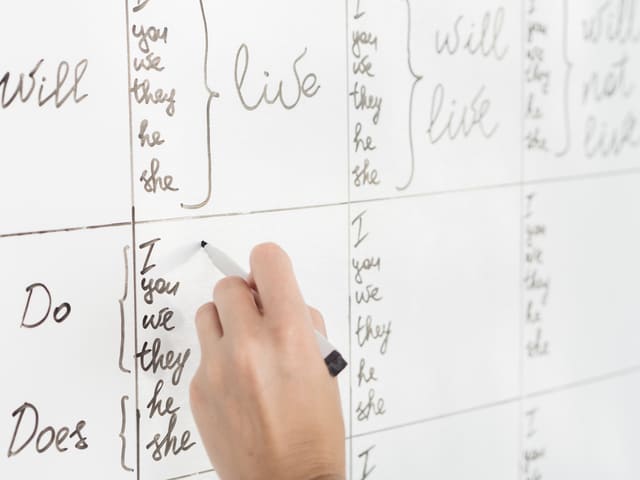
7. Past Perfect
Used for an action that was completed before another action in the past (“the past before the past”). Structure: Subject + had + V3 Keywords: before, after, already, when, by the time
- She had left before I arrived.
- He had eaten dinner when I called.
8. Past Perfect Continuous
Used for an action that was ongoing in the past and ended before another past event, with emphasis on duration. Structure: Subject + had + been + V-ing Keywords: for, since, before, by the time
- She had been studying for 3 hours before the exam.
- He had been running for an hour when it started to rain.
9. Future Simple
Used for actions that will happen in the future, spontaneous decisions, or predictions. Structure: Subject + will + V1 Keywords: tomorrow, next week, soon, in the future
- I will call you tomorrow.
- It will rain tonight.
10. Future Continuous
Used for actions that will be in progress at a specific time in the future. Structure: Subject + will + be + V-ing Keywords: at this time tomorrow, at 9 PM tonight, this time next week
- I will be sleeping at midnight.
- She will be working when you arrive.
11. Future Perfect
Used for actions that will be completed before a specific point in the future. Structure: Subject + will + have + V3 Keywords: by tomorrow, by next year, by the time
- I will have finished this project by Friday.
- She will have graduated by next June.
12. Future Perfect Continuous
Used for actions that will have been ongoing up to a point in the future, with emphasis on duration. Structure: Subject + will + have + been + V-ing Keywords: for, by the time, by then
- By next month, I will have been learning English for 2 years.
- She will have been working here for 10 years by 2030.
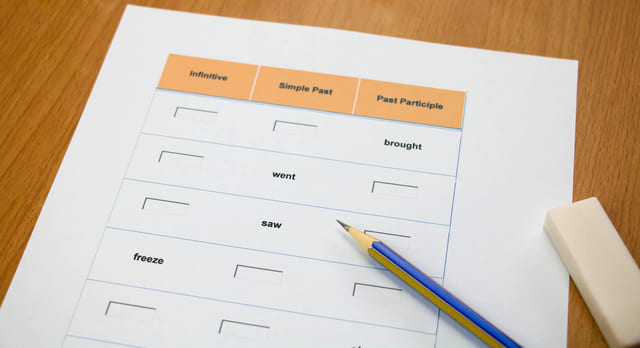
The 12 Tenses at a Glance
| Tense | Structure | Usage |
| Present Simple | S + V1 | Habits & routines |
| Present Continuous | S + is/am/are + V-ing | Action in progress now |
| Present Perfect | S + has/have + V3 | Completed with present relevance |
| Present Perfect Continuous | S + has/have been + V-ing | Ongoing from past to now |
| Past Simple | S + V2 | Completed past action |
| Past Continuous | S + was/were + V-ing | Action in progress in the past |
| Past Perfect | S + had + V3 | Action before another past action |
| Past Perfect Continuous | S + had been + V-ing | Ongoing action before a past point |
| Future Simple | S + will + V1 | Future action or prediction |
| Future Continuous | S + will be + V-ing | Action in progress in the future |
| Future Perfect | S + will have + V3 | Completed before a future point |
| Future Perfect Continuous | S + will have been + V-ing | Ongoing up to a future point |
Tips for Remembering the 12 Tenses
1. Learn the Core Structures
- Continuous always requires be + V-ing
- Perfect always requires have + V3
- Perfect Continuous combines both: have + been + V-ing
2. Remember the Helping Verbs by Time Frame
- Present: V1 / is, am, are / have, has
- Past: V2 / was, were / had
- Future: always uses will
3. Practice One Verb Across All 12 Tenses
Pick a single verb (e.g., play) and conjugate it through all 12 tenses. Seeing the structure change in parallel makes the differences much clearer.
Which Tenses Are Used Most in Everyday Life?
You don’t need to use all 12 tenses all the time. The five most commonly used tenses are:
- Present Simple — for general facts and personal information
- Past Simple — for storytelling and recounting events
- Present Continuous — for describing what is happening right now
- Future Simple — for plans and intentions
- Present Perfect — for sharing experiences
Mastering just these five will cover over 80% of everyday communication situations.
Frequently Asked Questions
- Why do we add -s or -es in Present Simple?
When the subject is third-person singular (he, she, it, or a single person’s name), the verb must take -s or -es to agree grammatically with the subject.
- What’s the difference between Present Perfect and Past Simple?
Past Simple is used when an action is completely finished and a specific time is mentioned (e.g., yesterday). Present Perfect focuses on the result or relevance to the present, without specifying an exact time.
- How do I know when to use a Continuous tense?
Ask yourself whether the action is in progress at that moment. If it feels like something is actively happening — right now or at a specific point in the past — use a Continuous tense.
- What’s the difference between will and be going to?
Generally, will is used for spontaneous decisions or predictions, while be going to is used for pre-planned actions or situations where there is already evidence that something will happen.
- What’s the best way to remember all 12 tenses long-term?
The most effective technique is simply to use them. Try forming sentences from your own daily life, or practice speaking with a native-English-speaking teacher. Active use will always outlast rote memorization.